Wave devices
Waves have the potential to provide a completely sustainable source of energy, which can be captured and converted into electricity by wave energy converter (WEC) machines. These WECs have been developed to extract energy from shoreline out to the deeper waters offshore.
We have identified eight main types of WEC:
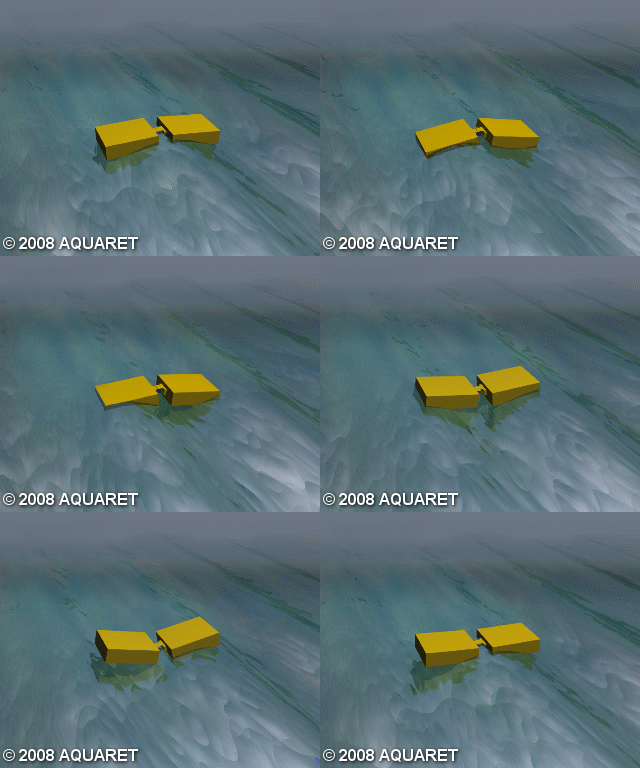
A) AttenuatorAn attenuator is a floating device which operates parallel to the wave direction and effectively rides the waves. These devices capture energy from the relative motion of the two arms as the wave passes them. |
 |
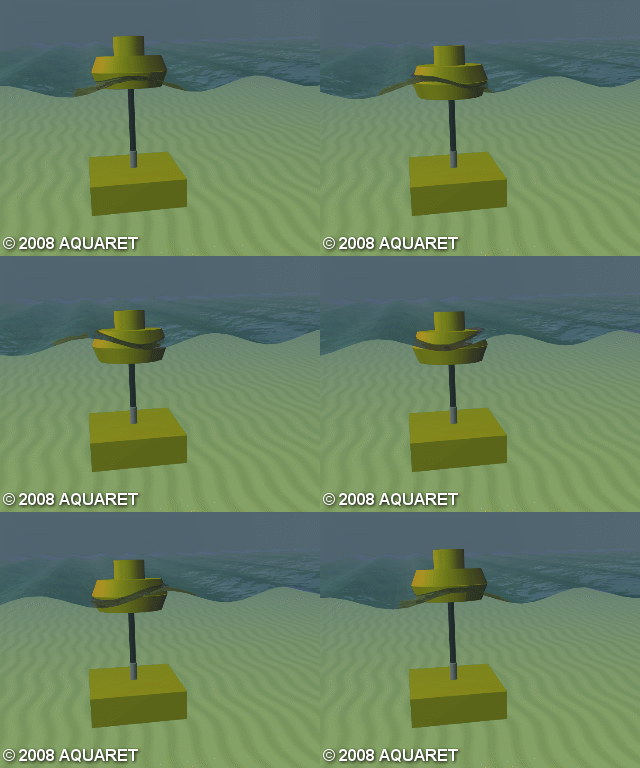
B) Point absorberA point absorber is a floating structure which absorbs energy from all directions through its movements at/near the water surface. It converts the motion of the buoyant top relative to the base into electrical power. The power take-off system may take a number of forms, depending on the configuration of displacers/reactors. |
 |
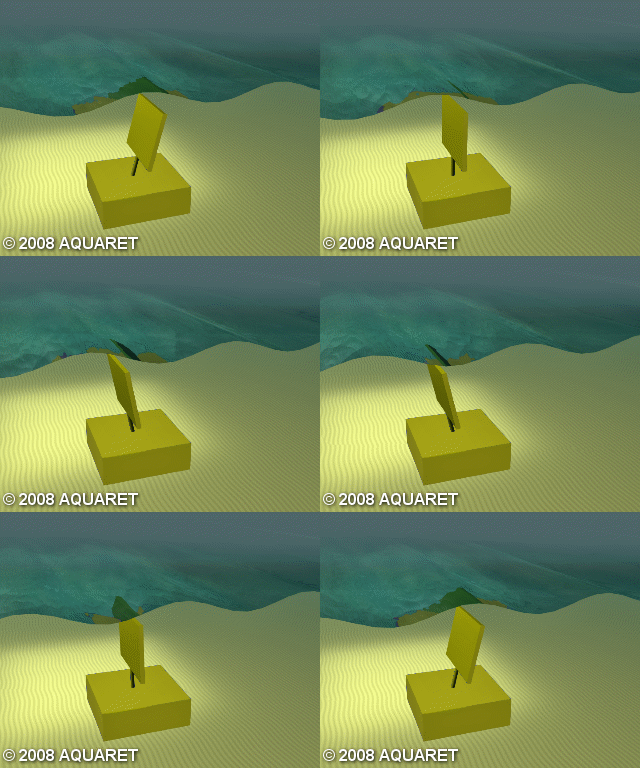
C) Oscillating Wave Surge ConverterOscillating wave surge converters extract energy from wave surges and the movement of water particles within them. The arm oscillates as a pendulum mounted on a pivoted joint in response to the movement of water in the waves. |
 |
D) Oscillating water columnAn oscillating water column is a partially submerged, hollow structure. It is open to the sea below the water line, enclosing a column of air on top of a column of water. Waves cause the water column to rise and fall, which in turn compresses and decompresses the air column. This trapped air is allowed to flow to and from the atmosphere via a turbine, which usually has the ability to rotate regardless of the direction of the airflow. The rotation of the turbine is used to generate electricity. |
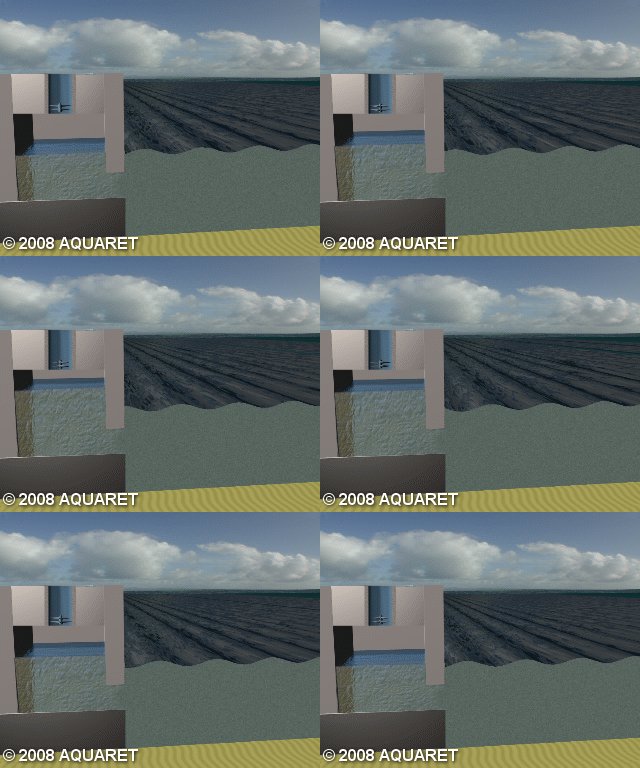 |
E) Overtopping/Terminator deviceOvertopping devices capture water as waves break into a storage reservoir. The water is then returned to the sea passing through a conventional low-head turbine which generates power. An overtopping device may use ‘collectors’ to concentrate the wave energy. |
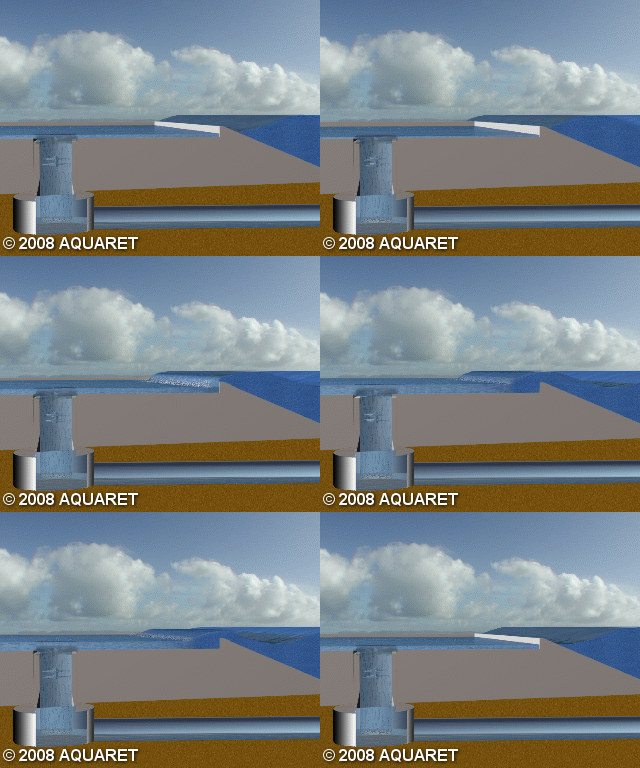 |
F) Submerged pressure differentialSubmerged pressure differential devices are typically located near shore and attached to the seabed. The motion of the waves causes the sea level to rise and fall above the device, inducing a pressure differential in the device. The alternating pressure pumps fluid through a system to generate electricity. |
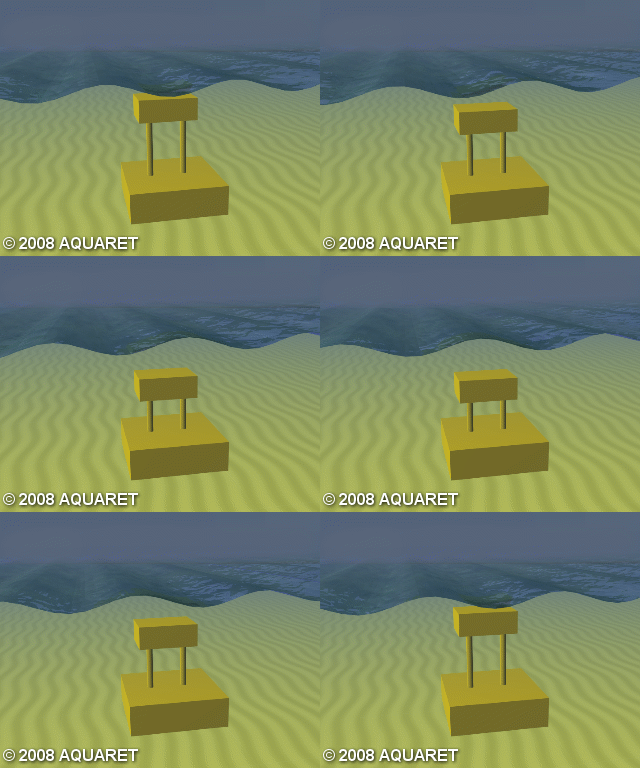 |
G) Bulge waveBulge wave technology consists of a rubber tube filled with water, moored to the seabed heading into the waves. The water enters through the stern and the passing wave causes pressure variations along the length of the tube, creating a ‘bulge’. As the bulge travels through the tube it grows, gathering energy which can be used to drive a standard low-head turbine located at the bow, where the water then returns to the sea. |
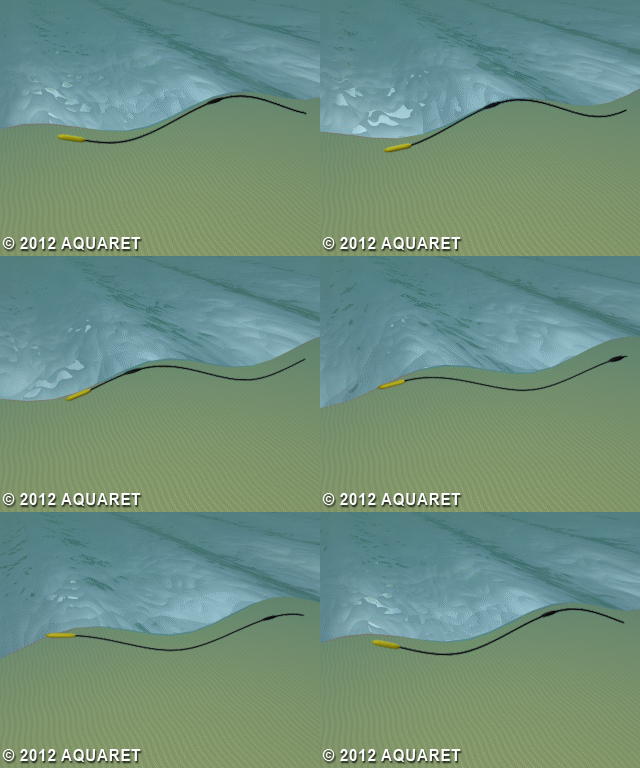 |
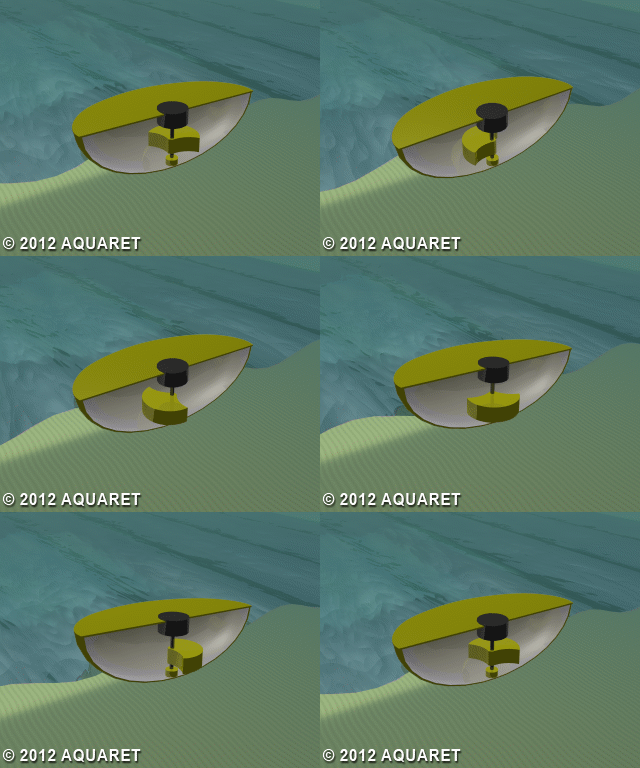
H) Rotating massTwo forms of rotation are used to capture energy by the movement of the device heaving and swaying in the waves. This motion drives either an eccentric weight or a gyroscope causes precession. In both cases the movement is attached to an electric generator inside the device. |
 |
I) OtherThis covers those devices with a unique and very different design to the more well-established types of technology or if information on the device’s characteristics could not be determined. For example the Wave Rotor, is a form of turbine turned directly by the waves. Flexible structures have also been suggested, whereby a structure that changes shape/volume is part of the power take-off system. To download the above animations please visit the Aqua-RET website. |