HyBRINE
Quick facts:
Project: HyBRINE
Duration: April 2024 – December 2024
Funder: Scottish Government (Hydrogen Innovation Scheme, part of the Emerging Energy Technologies Fund)
Partners: sHYp BV (lead), EMEC
Challenge:
Remote coastal and island communities face a unique energy dilemma: abundant renewable resources but limited grid capacity, which risks wasted energy potential. At the same time, these communities rely heavily on imported fossil fuels—often at higher costs than the national average—creating economic vulnerability and increasing carbon emissions. In Orkney, for example, fuel use per capita is 45% above the UK norm, with kerosene and diesel nearly double.
HyBRINE set out to tackle this challenge by exploring whether seawater could become part of the solution—transforming surplus renewable energy into feedstocks for synthetic fuels, reducing fuel poverty, and building energy resilience for the future.
Project Overview:
HyBRINE was a feasibility study which explored the technical and commercial viability of producing carbon dioxide (CO₂) and hydrogen (H₂) from seawater using sHYp’s innovative membraneless electrolyser technology. This approach aimed to support synthetic fuel production in remote coastal and island communities where renewable energy is abundant but often curtailed due to grid constraints.
How the technology works
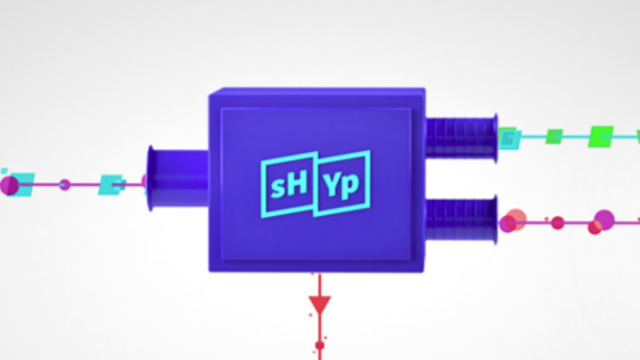
sHYp’s acid-base electrolyser (ABE), currently TRL4, uses seawater directly—no desalination, no purification, and no toxic waste—to generate two streams: CO₂ and H₂. The process also produces magnesium hydroxide (Mg(OH)₂) as a by-product
The study focused on the suitability of this technology for local production of synthetic fuels in communities facing:
- High fuel consumption and costs
- Reliance on imported fossil fuels
- Economic vulnerability due to energy dependence
Key Objectives
- Assess feasibility of sHYp technology for e-fuel production
- Identify suitable synthetic fuel processes for island communities
- Develop a roadmap for technology demonstration
EMEC’s role:
EMEC led the technical and commercial feasibility assessment of sHYp’s technology and developed a plan for a future demonstrator project.
Technical Deliverables:
- Comprehensive feasibility report on technology performance, economics, and environmental benefits
- Comparative analysis of synthetic fuel production methods
- Market analysis for synthetic fuels in island communities
- Recommendations for deployment and demonstrator roadmap
Outcomes:
The study confirmed that seawater electrolysis technology shows strong potential and, with continued learning and development, is expected to become increasingly competitive. A roadmap for a future demonstrator project was produced, including TRL targets and operational considerations. A staged approach to demonstration was recommended, progressing with the CO₂ capture element first. This is due to the lower cost and energy requirement compared to hydrogen electrolysis.
Key findings include:
- Staged approach: Begin with CO₂ capture (lower cost and energy requirement) before introducing hydrogen production to reduce technical and financial risk.
- Direct Ocean Capture (DOC): DOC offers a cost-effective alternative to Direct Air Capture (DAC) and helps reverse ocean acidification.
- Operational simplicity: sHYp’s technology uses seawater directly—no desalination, no purification, and no toxic waste—simplifying operations and reducing environmental impact.
- Economic opportunities: Magnesium hydroxide by-product can be used in various industrial processes e.g. supporting the decarbonisation of concrete production. This increases the economic viability by creating additional revenue streams.
- Modular design: Traditional synthetic fuel pathways (e.g., Fischer-Tropsch, RWGS) proved less economical at small scale, reinforcing the need for integrated “one-box” solutions such as sHYp technology for island or remote communities
Impact:
The HyBRINE study offers a innovative model for utilising curtailed renewable energy in islanded grids, reducing fuel poverty and improving energy resilience. Highlighted the potential of magnesium hydroxide by-product for concrete decarbonisation, creating cross-sector benefits for construction and energy.
It is recommended to seek funding for a demonstrator to trial the carbon capture aspect of the electrolyser.
News:
May 2023: EMEC win funding to drive green hydrogen innovation