2025 – innovation in action at EMEC

2025 has been a year of transformation and renewed ambition at EMEC. In March, I was honoured to step into the role of Managing Director after nearly two decades with the organisation. In my time at EMEC I have had the pleasure of working with most of the wave and tidal developers in the sector and I am really excited about the deployment opportunities we are building with industry in the years ahead.
I would also like to take this opportunity to thank Neil Kermode for his leadership at EMEC. Neil’s dedication and vision have been instrumental in shaping our journey and I am delighted that he continues to contribute his vast knowledge to us in his Associate role. Celebrating his 20th anniversary with EMEC in November, it was inspiring to reflect on his achievements and the sector’s progress over his two decades of service.
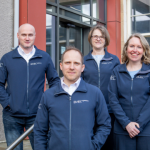
With our new look leadership team – Mark Hamilton joining myself, Eileen Linklater and Donna Ritch – we’re enthusiastic about the future. Together, we’re charting our next phase of growth to ensure EMEC remains well positioned to meet the evolving needs of the sectors we work in.


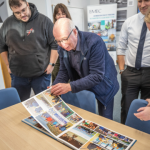
Central to our plans has been the formation of an Innovation Team within EMEC, bringing together our business development and technical delivery expertise. This integrated approach will deepen our research, development and innovation activities and strengthen our ability to co-create solutions with partners.
We are pushing on with the expansion of EMEC’s wave and tidal energy demonstration sites to accelerate from prototype demonstrations to building out arrays. This is a key step as the sector moves into a commercial phase.
We are also ramping up efforts to develop infrastructure to support the burgeoning floating wind sector and opportunities around alternative offtake for renewables. This is all coordinated through our Strategic Projects Team who are working closely with the Operations Team to deliver significant upgrades in our test and demonstration capabilities.
Throughout this review, you’ll find examples of how EMEC and our partners continue to deliver pioneering projects in ocean energy, hydrogen, offshore wind, integrated energy systems and island decarbonisation, all contributing to our ambition for a clean energy future.
I am proud of what we have achieved together this year and excited for the opportunities that lie ahead. Thank you to our dedicated team, partners and supporters for your continued commitment to EMEC’s mission.
As always, if you have an idea for a new project, please get in touch.
Matthew Finn
Managing Director
Sign up to our newsletter to stay updated on EMEC updates throughout the year.
Ocean energy
With over 25 GW of wave energy capacity and 11 GW of tidal stream potential, the UK is well-positioned to lead the global transition to marine renewables. Current projects are already demonstrating significant power outputs (e.g. MeyGen has generated over 84 GWh to date) and over 80% UK supply chain content (e.g. Orbital Marine Power’s O2 tidal turbine), reinforcing the sector’s ability to deliver environmental and economic benefits at scale.
The launch of the Marine Energy Taskforce in June renewed strategic focus for the sector. Backed by Energy Minister Michael Shanks MP, the Taskforce unites government, industry and innovators in a critical 12-month initiative to unlock the UK’s marine energy potential. Collaborating closely with the Energy Minister and other senior industry representatives, Neil Kermode is leading a working group on site development, with concurrent groups exploring finance, innovation and supply chain growth.
Another sector-wide endeavour is aiming to resolve consenting challenges, with a milestone report published in May. ‘Managing the Consenting Risk of Harbour Seal Collision in the Scottish Tidal Energy Industry’ sets out evidence‑led recommendations to underpin robust consenting to enable the growth of tidal stream energy in Scotland while addressing environmental concerns, particularly the potential impact on harbour seals.
Wave energy
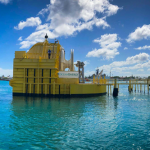


We’re working with several developers gearing up to deploy wave energy projects in Orkney in the coming years.
OceanEnergy, through the EU-funded WEDUSEA project, is advancing the development of its 1 MW OE35 floating wave energy converter. It’s commencing an ambitious build programme through winter 2025/26 in preparation for deployment at our Billia Croo wave test site.
Another company preparing for a Billia Croo demonstration is CorPower Ocean. It aims to deliver the UK’s largest wave energy project, a 5 MW array featuring 14 wave energy converters, scheduled for deployment in 2029. CorPower will also lead the recently announced €30 million POWER-Farm EU Project, addressing the competitiveness and bankability of wave farms by validating technology in conditions required for large-scale deployment in UK waters.
We also continue to work closely with Mocean Energy on its EuropeWave project, which progressed through final tank tests earlier in the year. And finally, thanks to a successful RISEnergy application, we’ll soon be welcoming a new wave energy developer to our Scapa Flow wave test site… more on that in the New Year.
Tidal energy
-
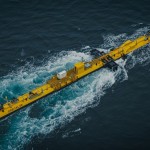
- Orbital O2 at EMEC’s Fall of Warness (Credit Orbital Marine Power)
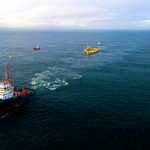
It’s been a busy year at EMEC’s Fall of Warness test site, with significant project activity underway as well as preparations for future tidal energy arrays.
Orbital Marine Power’s O2 tidal turbine has been operating since 2021 and over the summer, EMEC carried out a series of drifting acoustic surveys to measure the underwater soundscape around the device. We completed 45 drifts in total, with analysis of the results ongoing. These surveys, part of the EU-funded FORWARD2030 project, help developers and regulators build a clearer understanding of how marine energy technologies interact with their surroundings, ensuring the sustainable development of this emerging sector.
Highlights for Orbital through the year include securing £7 million investment to advance its international projects and being awarded licences to develop a tidal energy project in Canada.
Preparations at the Fall of Warness are underway for future tidal arrays from Orbital and Nova Innovation through the EURO-TIDES and SEASTAR projects. We’re making good progress on increasing the grid capacity at the site with connection agreements received, and just this week we achieved a major milestone in submitting our Section 36 application to increase consented capacity from 10 MW to 50 MW.
Beyond that, final site works following the decommissioning of OpenHydro’s infrastructure were completed, including capping the seabed cable with a high-voltage connector to ready it for use by future developers.

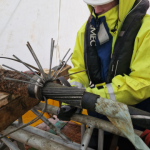
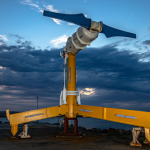
Meanwhile Magallanes Renovables’ ATIR device — which demonstrated at the Fall of Warness between 2019 to 2023 — has been towed back to Vigo, Spain, as the company focuses its attention on its next device, the ATIR 2.0.
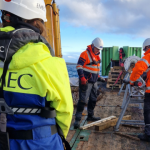
Across the other side of the Pentland Firth from Orkney, our team joined recent offshore operations at the MeyGen tidal array to observe subsea cable works, turbine maintenance and upgrades, and redeployments. It was a valuable opportunity for knowledge sharing and to see the progress made since earlier iterations of the turbines were demonstrated at EMEC. Since operations began, MeyGen has generated over 84 GWh of electricity and in March this year the site had a record-breaking month with its AR1500 tidal turbine delivering its highest-ever monthly output of 372 MWh.
Subsea components and digital technologies

In November, we kicked off an ambitious new initiative to advance subsea components and digital technologies for ocean energy. Coordinated by the EMEC, the €4 million EU-funded FOREST (Future Ocean Renewable Energy System Technologies) project brings together eight partners from the UK, Portugal, Spain and Sweden.
FOREST will deliver three major innovations, spanning cables, connector systems and measurement tools, all rigorously tested at EMEC’s test sites. By developing and testing next-generation subsea technologies crucial for ocean energy array deployments, the project aims to boost array performance, drive down costs and accelerate market readiness.
Health and safety focus
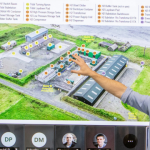

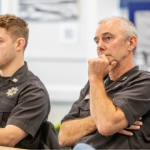
As a test and demonstration site for innovative technologies involving offshore operations and high-voltage systems, having a strong culture of health and safety is vital. We endeavour to mitigate risk where possible, but we also prepare for the unexpected.
We’ve been working with Inverroy Crisis Management Ltd for several years to stress-test and continually improve our incident response processes. This year, we stepped this up by carrying out tabletop exercises with the emergency services to strengthen inter-agency collaboration.
The event brought together representatives from Scottish Fire and Rescue Service, HM Coastguard, Police Scotland, NHS Scotland, Orkney Islands Council, Orkney’s Local Emergency Coordination Group (OLECG) as well as EMEC, Orbital Marine Power Ltd and Green Marine (UK) Ltd, exploring how each organisation would respond, increasing mutual understanding and identifying opportunities to coordinate effectively.
International collaboration
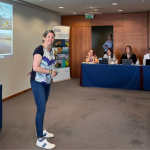

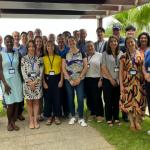

Our latest International WaTERS workshop took place prior to the European Wave and Tidal Energy Conference (EWTEC) in Madeira. This year we co-hosted the event with Ocean Energy Systems (OES), bringing together 29 delegates from 10 countries and 18 test sites and organisations. Huge thanks to OES for supporting the event, creating a valuable forum to share progress, explore barriers, offer peer-to-peer advice and identify opportunities for joint R&D.
EMEC has also been commissioned by OES-IEA to produce a report consolidating learnings from all International WaTERS workshops held since 2013. This will be published next year.
Our international partnerships continue to help shape the future of ocean energy on a global scale. This year, we supported the technology selection and qualification process for the American Tidal Energy Project (ATEP) in Alaska, USA, delivering a technology assessment report and annual energy production calculations. We’ve also been working closely with partners at Ocean University China and Qingdao National Laboratory for Marine Science and Technology (China), PacWave (Oregon, USA), Bourne Tidal Energy (Massachusetts, USA) and Southeast National Marine Renewable Energy Center (Florida, USA) to support the development of test and demonstration facilities worldwide.
Driving innovation at a European scale, EMEC continues to work closely with our partners in the EU-funded Marinerg-i programme, a research infrastructure initiative aiming to establish an independent legal entity to coordinate testing facilities and services across wave, tidal, wind, solar and hybrid energy technologies. EMEC has delivered market analysis on current and future demand, supported cost analysis and business planning, and is developing common standards and a quality control implementation plan.
Integrating ocean energy into a clean energy system
EMEC is driving innovation in the integration of renewables with complementary energy vectors and alternative offtake industries. Our goal is to accelerate the commercialisation of offshore energy and demonstrate new solutions for decarbonising power, heat and transport.
Hydrogen and battery trials
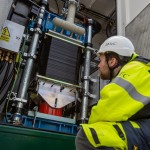
2025 has been a milestone year with the completion of two pioneering hydrogen demonstration projects that reflect years of dedicated work and are providing invaluable lessons to guide future projects.
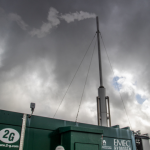
In October, we completed a trial of a hydrogen-powered combined heat and power (CHP) unit at Kirkwall Airport, marking the first time hydrogen has been used to meet both heat and power demands at a UK commercial airport. Manufactured by 2G, the system was integrated with the airport’s existing heating network to heat the main terminal building, and supply power across the site.
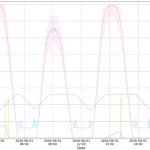
One month later, we delivered a world-first three-in-one demonstration at our onshore R&D site in Eday, integrating Orbital Marine Power’s O2 tidal turbine, vanadium flow batteries from Invinity Energy Systems, and an ITM Power 670 kW electrolyser. This demonstration proved how multi-vector systems can smooth the cyclical nature of tidal generation and unlock new offtake opportunities.
This demonstration follows the delivery of a detailed modelling study exploring how to optimise the integration of tidal energy and battery storage with alternative offtake routes, in this case hydrogen production, to overcome barriers to commercial scale tidal energy deployments.
With some R&D projects coming to an end, we’re readying our sites for the next wave of innovation demonstrations – whether that’s hydrogen, synthetic fuels, energy storage or direct air capture. If you have ideas for new projects or are interested in giving some of our retired hydrogen equipment a new home, get in touch – commercial@emec.org.uk.
Laying the groundwork for future demonstrations
EMEC’s hydrogen demonstration projects have provided valuable insights into production, storage, transport and end-use applications. We’ve learned about the technical challenges of integrating electrolysers with variable renewables, the hidden costs and regulatory hurdles in hydrogen logistics, and the limitations of using hydrogen directly as a fuel for power or heat.
We’ve been actively sharing this hands-on hydrogen experience and real-world lessons with stakeholders around the world, through grant-funded projects such as H2Heat in Gran Canaria and via bespoke knowledge exchange workshops for commercial clients.
Building on this experience, we see hydrogen’s greatest potential as a building block for liquid e-fuels. These fuels offer a practical pathway to decarbonise hard-to-electrify sectors like aviation and maritime where direct electrification is impractical. Synthesised from renewable hydrogen and captured carbon, these fuels can act as drop-in replacements for traditional fossil fuels, requiring little or no modification to existing engines and infrastructure and, when burned, release net-zero carbon emissions. This approach leverages hydrogen’s versatility while addressing storage, transport and energy density challenges, making it a scalable and impactful solution for decarbonisation.
To accelerate innovation in this area, EMEC has delivered a Scottish Government funded pre-FEED study assessing how our onshore facilities in Eday could host synthetic fuel R&D. The study considered site requirements, hazard management, consents, skills and resource needs. We’re keen to pursue this opportunity and are exploring funding options to progress towards a FEED study.
In the meantime, we’re involved in two new e-fuels initiatives under the UK Government’s Clean Maritime Demonstration Competition:
- Marine future fuels from waste: a feasibility study in collaboration with technology developer Hydrogen Refinery looking at converting household refuse into green hydrogen and synthetic fuels. EMEC will deliver a techno-economic assessment of the technology and explore the feasibility of deploying in Orkney.
- Shoreside methanol production: working with Transformational Energy, we are preparing for a demonstration of a modular e-methanol production unit at our Billia Croo site in Stromness. With support from Cooke Aquaculture, the project will look at the commercial case and applicability of e-methanol in the aquaculture sector.
We’ve also completed two feasibility studies with partners, delivering techno-economic assessments on technologies that support alternative offtake opportunities like synthetic fuel R&D.
- Seawater electrolysis for synthetic fuels: EMEC led a technical and commercial feasibility assessment, exploring the viability of producing carbon dioxide and hydrogen from seawater using sHYp’s membraneless electrolyser technology. Check out the HyBRINE project for an overview of the findings. This approach could enable synthetic fuel production in remote coastal communities where renewable energy is abundant but often curtailed. The study confirmed strong potential for seawater electrolysis and outlined a roadmap for a phased demonstrator project.
- E-fuels for maritime decarbonisation: We worked closely with Belfast-based CATAGEN to explore the market potential of its ‘ClimaHTech’ e-fuel production technology for the maritime sector. The study focused on e-diesel and biodiesel for marine vessels and port-side equipment, produced using hydrogen and carbon dioxide via ClimaHtech, electrolysis and direct air capture technologies. Several sites in Orkney and Belfast were identified for possible demonstrations, with EMEC providing site identification and guidance on compliance and regulation. The study confirmed that synthetic diesel production is technically viable, with costs expected to fall as technology matures.
Offshore wind R&D
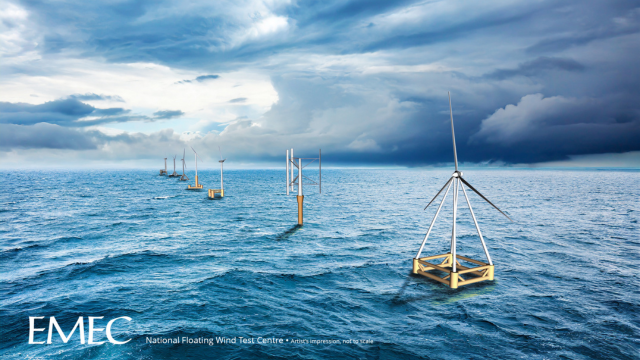
We continue to champion the case for a national floating wind test facility in the UK and feel momentum building. Earlier this year, EMEC signed an MOU with FLOWRA (The Floating Offshore Wind Power Technology Research Association of Japan) marking the start of a collaboration to explore opportunities for establishing and managing an offshore test and demonstration site for floating wind.
Industry engagement shows strong demand for such a resource, and we’re finding conversations are expanding beyond just floating wind to address broader deepwater requirements for the offshore wind sector. Building on this, The Crown Estate announced last week that EMEC has been successful in its Supply Chain Accelerator programme. This funding will help us take important steps toward realising our vision for a deep-water test site for offshore wind demonstrations, and we look forward to sharing more details on the project in the new year.
We were also delighted to welcome Crown Estate Scotland as a sponsor for our Offshore Wind Research and Innovation (R&I) Programme this year. Its backing enhances the programme’s capacity to de-risk offshore wind development while embedding economic value within Scottish communities.


Our first innovation call in the R&I Programme, delivered in collaboration with sponsor West of Orkney Windfarm, attracted 29 applications from supply chain companies pitching creative solutions for understanding metocean conditions and design for short weather window installations. Three companies — TRIOS Renewables, Seaview Sensing and Next Ocean — were awarded funding and have been progressing well, with EMEC hosting quarterly meetings to monitor progress and provide technical support. Final project presentations are scheduled for early next year.
In parallel, a related initiative offering earlier stage funding – Scottish Enterprise’s CAN DO Offshore Wind Innovation Feasibility Challenge Call – closes for applications on 9 January 2026. Grant support is available to Scottish companies to conduct detailed design, technical and/or commercial feasibility projects.
Islands decarbonisation
The Islands Centre for Net Zero (ICNZ), a pan-island project led by EMEC and funded by the UK and Scottish Governments as part of the Islands Growth Deal, is laying foundations for the transition to a low-carbon future and helping island communities take practical steps toward decarbonisation.

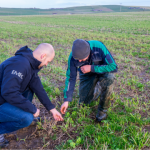
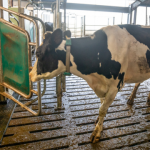
Some of the highlights from this year include:
- Building a clear picture of island emissions: Setting a clear baseline provides a robust foundation for targeted decarbonisation strategies. ICNZ has published an interactive dashboard showing greenhouse gas emission baselines for Orkney, Shetland and the Outer Hebrides. Where possible, island-specific data is used, revealing per-capita emissions significantly higher than UK averages driven largely by transport, energy and land use.
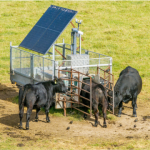
- Transforming agriculture for a greener future: With agriculture the largest source of greenhouse gas emissions in Orkney, we’ve launched four demonstration projects to reduce emissions, improve efficiency and strengthen farming resilience. These include dairy robotics trials, cover crops, reducing methane emissions from cattle and lowering the use of nitrogen fertilisers.
- Introducing the local household carbon calculator: Our new Household Carbon Calculator aims to help island communities assess and reduce their carbon footprint. It is tailored for Orkney, Shetland and the Western Isles, using local emission factors and reflecting unique challenges of remote areas such as higher reliance on fossil fuels. Tailored recommendations will be added next year to support practical action.
The team has also supported various related decarbonisation projects, tackling different aspects of the energy transition:
- A local energy demand and generation study for Scottish and Southern Electricity Networks (SSEN) combined technical modelling with local insights to close knowledge gaps and inform network and decarbonisation strategies.
- Rural Energy Hubs project trials spanning electric bus routes in Shetland, electric refuse collection in Orkney and the development of The Brae Rural Energy Hub in Shetland offering co-working spaces, EV charging, e-bike hire and energy advice.
- An AI platform developed through the Isle AI project to identify and address fuel poverty in rural island communities has been piloted in Orkney and scaled for use in Shetland and the Outer Hebrides.
- The EU-funded ISLANDER project piloted an integrated approach to renewable generation, storage and digital energy management on the German island of Borkum. Building on this, EMEC produced detailed studies for Orkney, Shetland and the Outer Hebrides, mapping energy demand, generation and infrastructure and considering how the solutions trialled in Borkum could be applied locally. The studies underscore the need to tailor approaches to local policy, regulatory, geographical, and behavioural factors and will serve as a key resource for ICNZ in guiding energy transition efforts.
Advancing sustainable aviation
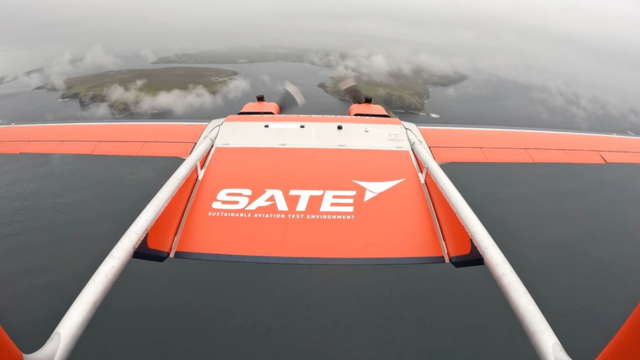
This year marked the completion of phase two of the Sustainable Aviation Test Environment (SATE) project, driving progress toward a UK centre of excellence for low-carbon aviation in the Highlands and Islands. Key achievements included regulatory engagement with the CAA, feasibility studies on emerging technologies and flight trials of Windracers’ ULTRA autonomous cargo aircraft which operated scheduled routes over nine weeks between Eday, Westray and North Ronaldsay.
EMEC worked with Cranfield Aerospace Solutions and HIAL to deliver the first comprehensive assessment of hydrogen refuelling procedures at operational airports. The report sets out practical steps for introducing hydrogen as an aviation fuel and provides recommendations to inform future CAA guidance. Looking ahead, the SATE consortium has secured additional funding through the UK Government’s Regional Future Flight Demonstrator programme. This next phase will deliver a regional sustainable aviation strategy for the Highlands and Islands, mapping how innovative technologies could support lifeline services, accelerate net-zero ambitions and boost economic development. Feeding into this, EMEC will lead a study of Orkney’s aviation infrastructure to identify gaps and opportunities for integrating sustainable aviation into existing assets.
Maritime innovation

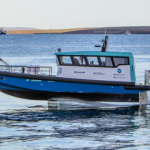
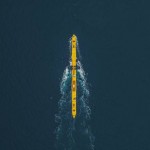
The Electric Orkney project reached a major milestone with the arrival of the Belfast-built Artemis EF-12 Workboat XL. This electric-powered hydrofoil vessel is undergoing sea trials to assess performance in Orkney before entering a trial service connecting Kirkwall with Shapinsay, Egilsay, Wyre and Rousay. The project aims to demonstrate the benefits of zero-emission vessels for inter-island routes, supporting decarbonisation and improving connectivity.
We continued working with SSEN on the second phase of SeaChange, a project focused on decarbonising the UK’s maritime sector by developing tools and models that enable ports and electricity network operators to plan for increased, cleaner energy demand in a coordinated and cost-effective way. The project’s main outputs — the Navigating Energy Transitions (NET) tool and the Living Port model — help ports map viable decarbonisation pathways, forecast future electricity needs and support strategic investment in resilient, low-carbon infrastructure. EMEC supported with local data collection and supply chain engagement.
Meanwhile, the CoastalCoRRE project kicked off, led by Urban Foresight and funded by Innovate UK via the Clean Maritime Demonstration Competition. This feasibility study is exploring modular floating e-boat charging hubs to overcome the physical, electrical and environmental constraints of remote coastal locations. EMEC is supporting market engagement and guiding the project’s approach to marine licensing and assessment of potential deployment sites.
Finally, the launch of the International Blue Economy Robotarium at All-Energy established Orkney as a hub for robotics innovation in the blue economy, bringing together partners including EMEC, Heriot-Watt University Orkney, Aquatera, Green Marine, Leask Marine and The National Robotarium to accelerate the development of cutting-edge marine robotic technologies.
Engagement and impact
Industry engagement
Connecting with colleagues in industry, academia and government is key to building partnerships for innovation projects and sharing knowledge to drive progress. Highlights this year include exhibiting alongside the Orkney supply chain at All-Energy in Glasgow, and engaging with colleagues at Ocean Energy Europe (Brussels), Floating Offshore Wind (Aberdeen) and Innovation Zero (London) to name a few.
A key highlight in the calendar was EWTEC in Madeira, and not just for the sun. We hosted two side events to deepen our academic engagement: the International WaTERS Workshop (mentioned above); and a dedication session for academics and universities to explore opportunities around EMEC’s new status as an Independent Research Organisation (IRO). These discussions highlighted strong support for EMEC’s role in bridging research, tank testing and offshore demonstration with clear demand for real-world data.
Community connections


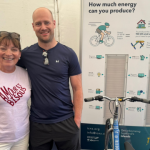

Closer to home, we’ve loved getting involved in the many vibrant community events in Orkney. The buzz around the Orkney 2025 Island Games was electric, and we were delighted to sponsor Orkney’s triathlon and swimming teams. Many of our colleagues volunteered throughout the week to help make the Games a success, while athletes, visitors and even some VIP guests tested their pedal power on our new ICNZ energy bikes, including none other than Lorraine Kelly!
Our Renewable Revolution Open Day during Stromness Shopping Week has become a staple of the programme, attracting over 100 bairns (and some adults) to explore renewable energy and sustainability with us and local businesses. At the Orkney International Science Festival, we enjoyed the lively discussions at our ‘Tech on the Tarmac’ showcase, pedal-powered fun at the Family Day — engaging with young people on green career paths — and thought-provoking presentations at Orkney’s first Climate COP.
We’re proud to support local events and clubs, from sponsoring the Orkney Amateur Swimming Club Gala, to sandcastle and art competitions in Eday, and the Orkney Folk Festival where many of our team volunteered. And of course, we couldn’t miss contributing to the magnificent creel Christmas tree in support of the Stromness Lifeboat.
In the spotlight
The enthusiasm for renewables in Orkney continues to grow, and we were thrilled to visit Powered by People, a new exhibition at Stromness Museum, celebrating the county’s rich and evolving renewable energy heritage. The exhibition shines a light on Orkney’s pioneering role in clean energy innovation and the human stories behind this journey, sparking conversations about fairness, innovation and community impact. Well worth a visit if you get the chance.
Meanwhile, our renewables story continues to make waves globally. Check out:
- Matthew Finn’s interview in Enlit, where he shares his vision for Orkney leading the way in creating a cleaner, more sustainable energy future.
- An Optimist’s Guide to the Planet, an inspiring series featuring Nikolaj Coster-Waldau (of Games of Thrones fame) as he searches the globe for people driving humanity toward a more sustainable future. The Real Cost of Our Energy Demand episode offers a fascinating look at Orbital Marine Power’s O2 project at the Fall of Warness.
Finally, EMEC’s economic impact has been recognised in a case study by The Scottish Government Just Transition Commission. An online map plots projects and initiatives across Scotland that are making positive contributions across a range of just transition challenges.