Shaping Scotland’s future through island innovation

Scotland’s islands have long been places of ingenuity, resilience and quiet leadership – qualities we see every day in Orkney. The recent publication of the second National Islands Plan reaffirms just how central island communities are to Scotland’s future – economically, socially and environmentally.
In this blog, EMEC’s Corporate Affairs Director, Eileen Linklater, shares her reflections on what the new plan means for islands communities and for EMEC’s role within that landscape.
EMEC’s vision – to pioneer the transition to a clean energy future – aligns closely with the ambitions set out in the National Islands Plan. Being based in Orkney, we recognise that EMEC’s work is just one part of a much wider collective effort across the islands.
For me, EMEC’s key role is listening, learning and contributing where we can, working alongside communities, businesses and partners who are all helping shape a fairer, more resilient energy future across Scotland’s islands and beyond.
Islands at the forefront of the energy transition
The National Islands Plan acknowledges that island communities are on the front line of climate change, while also being uniquely placed to lead the transition to cleaner, fairer energy systems. One of the plan’s strategic objectives sets out a clear commitment to address this dual challenge and opportunity:
“To accelerate the transition to net zero on islands by supporting renewable and nature-based solutions, ensuring local ownership and securing fair returns for island communities while building long-term resilience.”
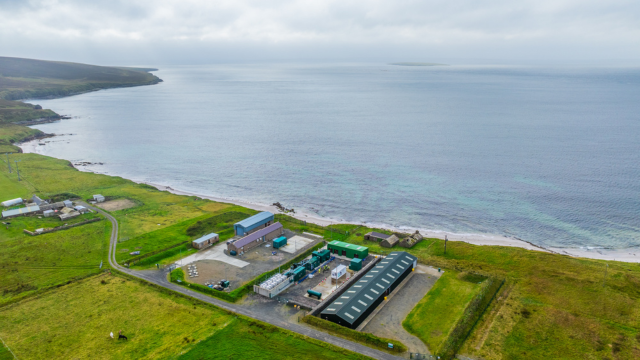
Across our islands, there is a long-standing tradition of learning by doing: testing ideas at small scale, proving what works, then sharing that learning widely. Demonstration projects on islands aren’t just pilots; they are opportunities to build place-based understanding, reduce risks and ensure innovations are genuinely fit for purpose before wider adoption.
From my experience with island organisations and communities, it’s clear that this practical, hands‑on approach is one of the islands’ greatest strengths. I believe islanders have a unique understanding of sustainability and the importance of stewardship of resources. Rather than being insular (as might be expected of place ‘on the edge’) I believe Orkney to be outward and forward-looking, particularly where there are opportunities to innovate.
This is particularly true when it comes to recognising the power and value of the sea: marine renewable energy is just the latest in long line of industries which have brought opportunity to Orkney via the ocean.
EMEC is fortunate to contribute to this landscape. As the world’s leading test laboratory for marine energy, we’ve hosted 35 marine energy devices from 11 countries in Orkney’s powerful seas. The knowledge, skills and supply chain capability developed here are directly useful to island communities, but they also inform global best practice.
I’ve seen Green Marine and Leask Marine evolve their local fishing and diving operations into globally significant vessel operators offering marine services for offshore renewables, and Aquatera provide environmental consultancy for clients in more than 30 countries from their base in Stromness.
This outward impact is only possible because the islands provide a rich, collaborative environment for experimentation and learning.
Living and working in Orkney, I’m regularly reminded that innovation thrives when it is grounded in place and informed by strong communities. After years of battling grid constraints, Orkney Islands Council’s leadership in championing the renewables sector has been pivotal in progressing our new Orkney interconnector and enabling projects such as the Quanterness Windfarm, demonstrating how local action can shape a future facing, community powered energy system.
A multimillion-pound investment accelerating tidal energy R&D
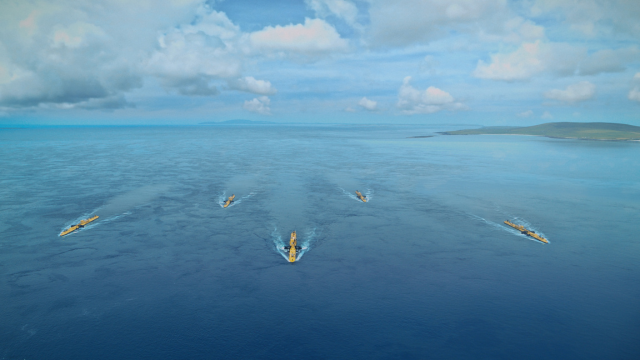
The recent announcement of EMEC’s multimillion pound infrastructure expansion represents another opportunity to strengthen Scotland’s capability in tidal energy. The upgrades will enhance grid connections, modernise test facilities and expand our ability to integrate storage and power management systems – crucial steps in supporting developers as they move from single prototypes to early multi-device arrays.
This investment aligns strongly with National Islands Plan priorities, supporting:
- green infrastructure as a foundation for stronger island economies;
- growth in net zero industries;
- energy security for remote and island communities;
- local job creation and opportunities that attract and retain people; and
- the use of islands as innovation testbeds, benefiting the whole of Scotland
Importantly, this kind of innovation support is not a subsidy – it is an investment in future resilience, in new markets and in long-term job creation.
By building capacity now, Scotland’s islands can be at the epicentre of emerging global sectors such as wave and tidal energy, ensuring that economic, environmental and community benefits stay local. Orbital Marine Power’s O2 tidal turbine, currently operating at EMEC’s Fall of Warness demonstration site, offers a clear example of this in action: the Orkney‑based developer reports more than 80% UK supply‑chain content during development and deployment.
Deepwater wind, alternative energy offtakes and whole-system innovation
Across the islands, many organisations, innovators and community groups are trialling solutions to cut emissions, lower energy costs and improve energy reliability. EMEC is an important contributor to this wider ecosystem.
Our recent activities include:
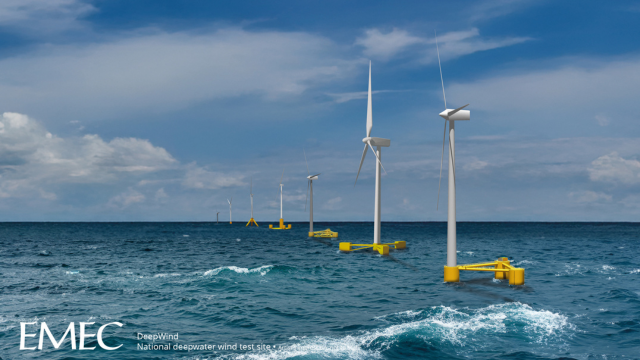
- advancing designs for a deepwater and floating wind test facility (DeepWind), supported through the Crown Estate’s Supply Chain Accelerator;
- expanding demonstrations of alternative offtakes such as hydrogen and e-fuels for aviation, ferries and heat; and
- leading the Islands Centre for Net Zero (ICNZ) – a collaborative partnership helping Orkney, Shetland and the Outer Hebrides shape community-led pathways to decarbonisation.
All these efforts stem from the same principle: island-led innovation.
Islands operate as a microcosm of Scotland’s wider energy system, offering a contained environment in which to develop and demonstrate new approaches to decarbonisation and resilience. However, islands also face some of Scotland’s most acute energy challenges – from higher fuel poverty and grid constraints to high reliance on imported fuels. As such, they are ideal places to explore practical, replicable low carbon solutions.
Lessons learned here can then be scaled up responsibly, in ways that reflect the diverse needs of other regions.
Creating local benefit with national impact
An independent economic impact assessment found that in its first 20 years EMEC has:
- added £370 million GVA to the UK economy, including £263 million to Scotland and £130 million in Orkney;
- supported 540 full-time equivalent jobs, 224 of them in Orkney; and
- spent over half of its expenditure locally between 2005–2024.
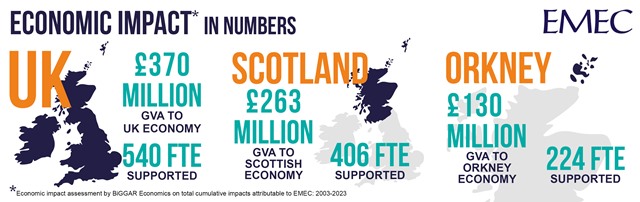
These figures underline the value of investing in innovation, showing that when it is rooted in local places, the investment has a far deeper impact on the communities that host it.
Further infrastructure investment will build on this – supporting local suppliers, enabling new skills and green jobs, and strengthening the islands’ role in Scotland’s transition to net zero.
A shared vision for thriving islands
The National Islands Plan sets out an ambitious but achievable vision: thriving, resilient communities with strong local economies, fair access to clean energy, and opportunities for people to live, work and prosper on the islands.

We believe that renewable energy innovation, undertaken carefully, collaboratively and with communities at the centre, has a vital role to play in delivering that vision. EMEC is proud to support this journey, but equally aware that we are one part of a much larger island-led movement.
As Scotland accelerates towards decarbonisation, the islands – guided by community empowerment and decades of practical innovation – are not simply adapting to change; they are shaping it.
Islanders are demonstrating what a resilient, fair and low carbon future can look like. And EMEC remains committed to learning and contributing wherever we can.

Eileen Linklater
Corporate Affairs Director
If you have an idea for islands innovation you’d like to discuss, please get in touch:
- Email: info@emec.org.uk
Coming soon:
EMEC has been hosting Edinburgh University PhD researcher, Lara Santos Ayllon, whose research explores the justice dimensions of emerging energy technologies in the Orkney context. Lara will soon be sharing a series of blog posts highlighting her findings and recommendations.