Next phase of UK deepwater wind test site development begins
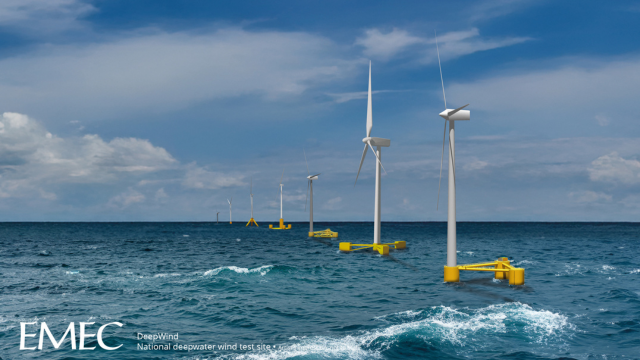
18‑month project will move national deepwater wind test site from concept to delivery, addressing a critical gap in the UK offshore wind sector.
The European Marine Energy Centre (EMEC) has commenced an 18‑month project to advance its proposed deepwater and floating wind test facility – DeepWind.
Backed by 50% match funding through The Crown Estate’s Supply Chain Accelerator, the programme will build on EMEC’s earlier concept design for a national floating wind test site.
As UK offshore wind projects scale into deeper waters, developers require a representative environment to prove, refine and de‑risk technologies before full commercial deployment. However existing test sites across Europe lack the necessary metocean conditions for the offshore wind projects in the UK’s pipeline.
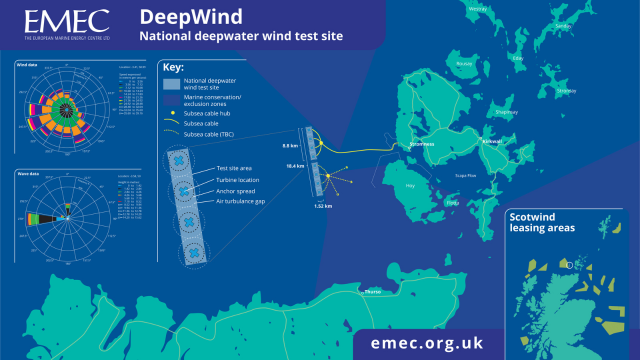
To address this gap, EMEC has identified a site 20 km west of Orkney with ideal water-depths, seabed conditions and wind speeds.
The £500,000 project will complete feasibility, design scoping and industry engagement to confirm site infrastructure requirements, considering logistical and operational needs to ensure connectivity to ports and alignment with the UK offshore wind ecosystem. EMEC will also progress environmental scoping and early-stage survey work at the prospective site including bathymetry, sub‑bottom profiling and ornithological/marine mammal monitoring.
By providing a pathway for deepwater and floating wind innovation, the DeepWind test site will help attract investment and strengthen the UK’s position as a global leader in offshore wind innovation.
Mark Hamilton, Operations & Technology Director, said:
“The Crown Estate’s Accelerator funding enables us to move decisively from concept to delivery planning for our deepwater wind test site. During the project, we aim to progress leasing and grid-connection applications, and will initiate some of the longest-lead environmental studies, moving us towards full consenting and Front-End Engineering Design.
“The key outcome will be a robust investment case for phased development of the test site. We will be running a series of engagement exercises over the coming months to gather insight from developers, OEMs, insurers, investors, regulators and community groups and I encourage interested parties to get in touch with us for more detail on how they can help shape the future of UK offshore wind testing.”